Tooth Pain When Drinking Cold Water: Causes, Symptoms & Treatment
You take a sip of chilled water on a hot Vadodara afternoon, and a sharp jolt shoots through your tooth. It fades in a few seconds, but it leaves you wondering what just happened, and whether you should be worried.
Tooth pain when drinking cold water is one of the most common dental complaints we see at Dr. Purani's. Sometimes it's simple sensitivity that responds well to a change in toothpaste. Other times, it's an early warning of decay, a crack or a nerve problem that needs treatment. Knowing the difference can save you from bigger pain later.
Why Do Teeth Hurt with Cold Water?
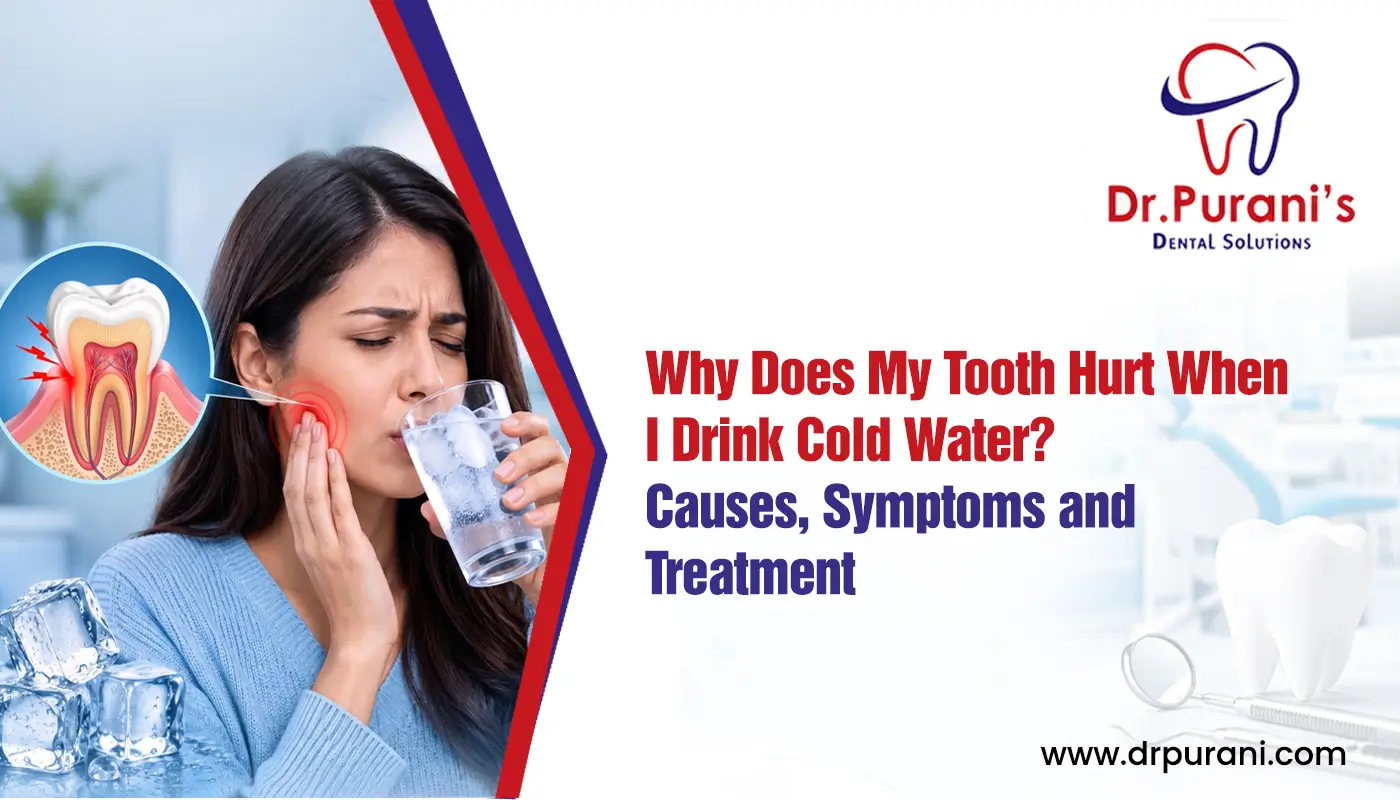
To understand cold sensitivity, it helps to know how a tooth is built. The outer layer, enamel, is hard and has no nerves. Beneath it lies dentine, which contains thousands of tiny fluid-filled channels called dentinal tubules. These tubules lead to the pulp, the centre of the tooth where the nerve lives.
When enamel wears away or gums pull back, the dentine becomes exposed. Cold water causes the fluid inside the tubules to move suddenly, and the nerve reads that movement as sharp pain. The more tubules that are exposed, and the more inflamed the nerve is, the stronger the reaction.
Common Causes of Tooth Pain When Drinking Cold Water
1. Worn Tooth Enamel
Enamel can wear down over years from brushing too hard, using a hard-bristled brush, or frequently consuming acidic foods and drinks like citrus fruits, pickles, soft drinks and packaged juices. Once enamel thins, dentine sits closer to the surface and reacts quickly to cold.
2. Tooth Decay
A cavity creates an opening through the enamel into the dentine. In the early stages, the only symptom may be a quick twinge with cold or sweet foods. As decay grows deeper, the sensitivity becomes stronger and may linger. Treating decay early with a simple tooth filling in Vadodara stops the damage before it reaches the nerve.
3. Receding Gums
Gums normally cover and protect the root surfaces of your teeth. Roots have no enamel covering, so when gums recede, the sensitive root surface is exposed directly to cold. Gum recession can result from aggressive brushing, gum disease, teeth grinding, tobacco use and ageing.
4. Gum Disease
Plaque and tartar along the gum line cause inflammation, bleeding and, over time, loss of gum and bone support. This exposes more root surface and makes teeth increasingly sensitive. Professional teeth cleaning in Vadodara removes the buildup, and advanced cases may need gum flap surgery in Vadodara to treat deep pockets around the teeth.
5. Cracked or Chipped Teeth
Even a hairline crack can let cold reach the inner layers of a tooth. Cracks often cause pain with cold and also a sharp pain when biting down. They can be difficult to spot without a close examination and an X-ray.
6. Worn or Leaking Fillings
Old fillings can develop tiny gaps at their edges over time. Cold fluids seep into these gaps and trigger sensitivity, and bacteria can also get in and start new decay underneath. Replacing a leaking filling usually resolves the problem.
7. Recent Dental Treatment
It's common to have some temporary sensitivity after a new filling, a crown, professional cleaning or teeth whitening treatment in Vadodara. This usually settles within a few days to a couple of weeks. If it doesn't, or if it gets worse, let your dentist know.
8. Teeth Grinding and Clenching
Grinding at night slowly wears down enamel and can create small fractures and gum recession, all of which make teeth more sensitive to cold. Many people don't realise they grind until a dentist notices the wear pattern.
9. Inflamed or Infected Nerve (Pulpitis)
When the pulp becomes inflamed from deep decay, a crack or trauma, cold sensitivity changes character. Instead of a quick zing, the pain lingers for 30 seconds or longer after the cold is gone. This is a sign the nerve may not recover on its own and often needs root canal treatment in Vadodara.
Symptoms: Simple Sensitivity or Something More Serious?
The way your tooth reacts to cold gives useful clues about what's going on.
| What You Feel | What It May Mean |
| Quick, sharp pain that stops within a few seconds | Exposed dentine, worn enamel or receding gums |
| Pain in one specific tooth every time | Cavity, crack or leaking filling |
| Several teeth sensitive at once | Enamel wear, gum recession or grinding |
| Pain lingering 30 seconds or more after cold | Inflamed nerve (pulpitis) |
| Cold sensitivity plus pain when biting | Cracked tooth |
| Cold sensitivity with bleeding or swollen gums | Gum disease |
| Cold now relieves pain that heat makes worse | Possible nerve infection, see a dentist promptly |
Only an examination can confirm the cause, but these patterns help you judge how urgently to book a visit.
How We Diagnose Cold Sensitivity
At Dr. Purani's, we start by asking which teeth hurt, what triggers the pain and how long it lasts. We then examine your teeth and gums, check for wear, cracks, recession and old fillings, and may perform a gentle cold or tap test to identify the exact tooth involved.
If we suspect decay between teeth, a crack or a nerve problem, a digital dental X-ray in Vadodara helps us see inside the tooth. An RVG X-ray gives a clear, low-radiation image of the affected tooth so treatment can be planned precisely.
Treatment for Tooth Pain When Drinking Cold Water
The right treatment depends on the cause. Here are the most common options.
➤ Desensitising Toothpaste: For mild sensitivity from exposed dentine, toothpaste formulated for sensitive teeth can help by calming the nerve response or blocking the tubules. It works gradually, so use it consistently for a few weeks.
➤ Fluoride Application: A professional fluoride varnish strengthens enamel and reduces sensitivity. Your dentist may apply it at the clinic and recommend fluoride products for home use.
➤ Bonding or Tooth-coloured Fillings: Exposed root surfaces, worn areas near the gum line and cavities can be covered with tooth-colored fillings in Vadodara, which seal the sensitive area and restore the tooth's shape.
➤ Laser Treatment: In selected cases, laser dental treatment in Vadodara can be used to help reduce dentine sensitivity and treat certain gum conditions with minimal discomfort.
➤ Gum Treatment: When gum disease is behind the sensitivity, scaling and polishing in Vadodara is the first step. Deeper infection may need periodontal treatment to protect the remaining gum and bone.
➤ Crowns: A cracked or heavily worn tooth may need dental crown treatment in Vadodara to protect it from further damage and cold exposure.
➤ Night Guard: If grinding is the cause, a custom night guard protects your teeth from further wear while you sleep.
➤ Root Canal Treatment: When the nerve is irreversibly inflamed or infected, a root canal removes the damaged pulp and relieves the pain. At Dr. Purani's, we offer painless root canal treatment, and many cases can be completed as single sitting root canal treatment.
Home Care Tips to Reduce Cold Sensitivity
➤ Use a soft-bristled toothbrush and brush gently, from the gums towards the teeth
➤ Avoid scrubbing horizontally, which wears enamel and pushes gums back
➤ Switch to a toothpaste made for sensitive teeth and use it every day
➤ Cut down on acidic foods and drinks, and rinse with plain water after having them
➤ Wait at least 30 minutes after acidic food before brushing
➤ Drink very cold drinks through a straw to limit contact with sensitive teeth
➤ Avoid tobacco in all forms
➤ Visit your dentist every six months for a check-up and cleaning
When to See a Dentist
Book an appointment if:
➤ Sensitivity lasts more than two weeks, even with a sensitive-teeth toothpaste
➤ The pain lingers well after the cold is gone
➤ Only one tooth is affected every time
➤ You also feel pain when biting or chewing
➤ Your gums bleed, look swollen or appear to be shrinking
➤ Sensitivity started after a fall, injury or biting something hard
➤ You notice swelling, a bad taste or throbbing pain at night
If you're not sure what's causing your pain, our guide on what causes toothache explains other common reasons for tooth pain.
Visit Dr. Purani's for Sensitive Teeth in Karelibagh, Vadodara
Tooth sensitivity can have several causes, from exposed dentine and gum recession to cavities, cracks or an irritated tooth nerve. Finding the cause early can help you choose the right treatment.
Dr Gargee Purani and the team at Dr Purani's provide dental care for sensitive teeth, including diagnosis, fillings, gum care and root canal treatment when required.
If you are looking for a dentist in Karelibagh or a general dentist in Vadodara, contact Dr. Purani's to discuss your symptoms and arrange an appointment.