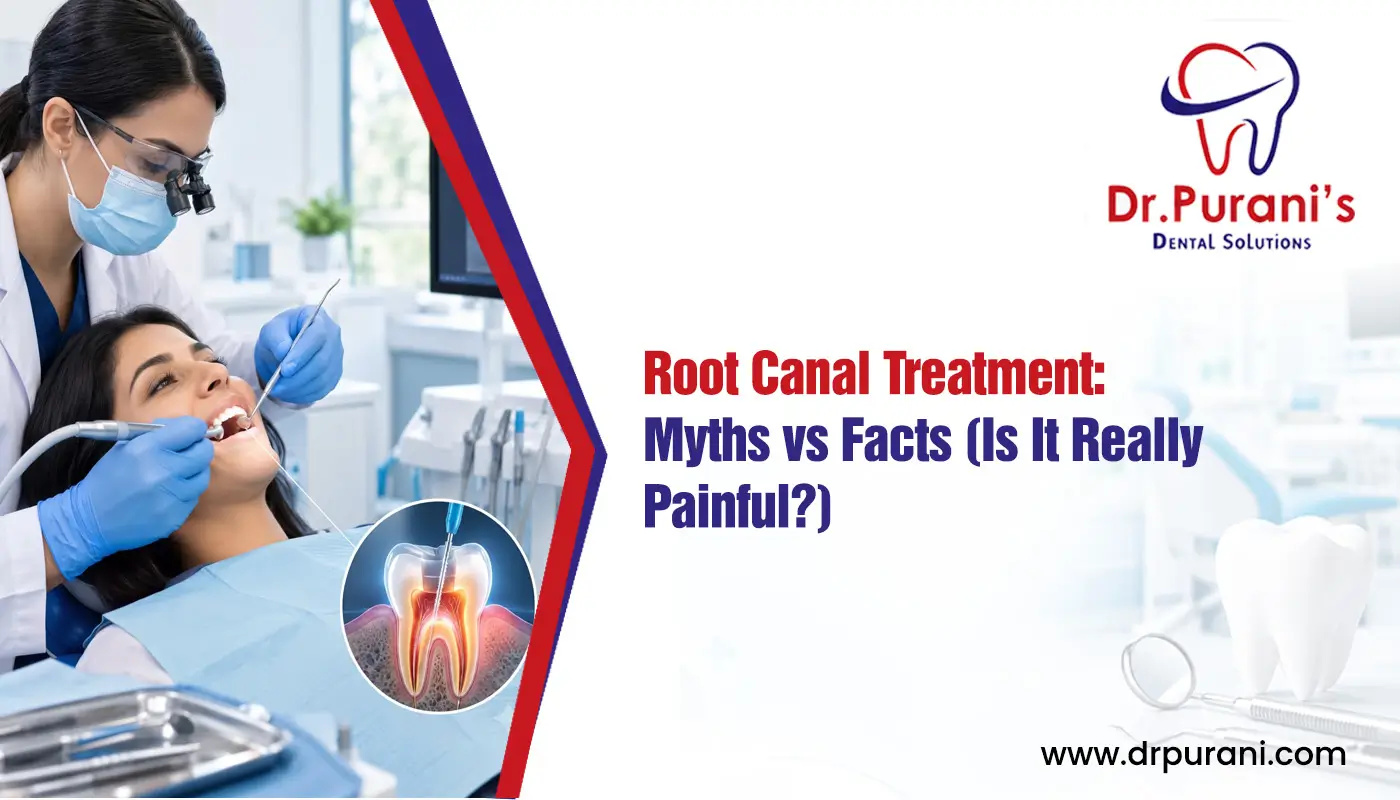
Root Canal Treatment: Myths vs Facts (Is It Really Painful?)
Root canal treatment is often perceived as one of the most painful dental procedures. The idea of drilling into a tooth can make many people put off root canal treatment even when they’re already in tooth pain. Modern dentistry has made root canal treatment much easier and more comfortable. A root canal is done to treat a tooth that is infected or badly damaged. In cases root canal treatment can actually ease the pain caused by the infection. Knowing exactly what happens during a root canal can help patients make choices instead of believing common myths. Dr. Purani’s Dental Solutions provides care that fits the condition of the tooth, not just general assumptions, about treatment.
How Does Root Canal Treatment Work?
A root canal treatment is a procedure that is performed when the soft tissue inside a tooth called the pulp becomes inflamed or infected. This can happen because of decay, cracks, repeated procedures or an injury.
During a root canal treatment the dentist removes the damaged pulp, cleans and disinfects the inside of the tooth, fills and seals the root canals and restores the tooth. A crown may be suggested in some cases to give protection especially when the tooth has lost a lot of structure.
When an infected tooth needs treatment seeking a root canal treatment in Vadodara can stop the problem from getting worse. Give the dentist a chance to see if the natural tooth can be saved. Our team focuses on accurate diagnosis and appropriate treatment, and many patients who undergo root canal treatment experience significant relief and peace of mind.
Myth 1: Root Canal Treatment Is Extremely Painful
Fact: Modern root canal treatment is generally performed with local anaesthesia.
One of the misconceptions is that the treatment itself causes severe pain. The truth is, local anaesthesia is used to numb the tooth and the area around it. This means patients should not feel pain during the procedure.
Some pressure, vibration or movement might be felt while the dentist works on the tooth. These sensations are usually not painful. After the treatment, some discomfort can occur. This discomfort is usually temporary and can often be managed with the guidance of the dentist.
In fact the infection or inflammation that makes a root canal necessary may be the cause of the pain a patient is already feeling. With anaesthesia and modern dental techniques, the treatment can be much more comfortable than most people think. Many patients find it less painful than they expected.
Myth 2: A Painful Tooth Always Needs a Root Canal
Fact: Tooth pain can have several causes.
Tooth sensitivity, tooth decay, gum problems, a cracked tooth, worn enamel and an exposed tooth root can all cause discomfort. Not every toothache requires root canal treatment.
A dentist needs to examine the tooth and identify the cause of the pain. Depending on the symptoms, this may involve dental X-rays and other tests to determine whether the pulp inside the tooth is inflamed, infected or damaged.
Treatment should depend on the cause of the problem, not just on the pain. Patients who are looking for painless root canal treatment & wisdom teeth removal in Vadodara should also know that root canal treatment does not always remove all sensation completely. The main goal is to use diagnosis, proper anaesthesia and modern techniques to make the treatment as comfortable as possible.
Myth 3: Root Canal Treatment Means the Tooth Has to Be Removed
Fact: The purpose of a root canal is to save the natural tooth.
When the pulp is infected, but the tooth can still be fixed, root canal treatment lets the dentist get rid of the infection while keeping the rest of the tooth as it is.
Keeping a tooth can help maintain chewing ability and stop other teeth from moving in a bad way. Extraction might be an option when a tooth is too broken to fix. That is not what root canal treatment is for. A dentist can check if the tooth has a part left to fix by looking at how it is.
Myth 4: Extraction Is Better Than a Root Canal
Fact: Saving a natural tooth is often preferable when possible.
Removing a tooth can help treat an infection. Removing a tooth also leaves a missing space. Depending on where a tooth's located, replacing a tooth with a dental implant, bridge, or other restoration may then be necessary.
I think if a tooth can be successfully treated and restored, preserving a tooth may help keep function. The appropriate choice depends on a tooth's condition, surrounding tissues and long‑term prognosis.
Myth 5: Root Canal Treatment Takes Many Appointments
Fact: Treatment time varies from tooth to tooth.
Some root canal treatments can be done in one visit, while at times it takes more than one visit. How many visits are needed depends on things like where the tooth is, how many roots it has, how the roots are shaped, how bad the infection is and how complicated the situation is.
In some cases, a single sitting root canal treatment in Vadodara can be done. A single visit is not right for everyone. The dentist should decide how many visits are needed based on the condition of the tooth.
Myth 6: Once the Pain Goes Away, Treatment Is Not Necessary
Fact: An infection does not necessarily disappear because the pain stops.
Dental pain can sometimes get better when the nerve inside a damaged tooth stops working. This does not always mean that the infection is gone.
Unfixed dental infections can keep hurting the areas around the tooth. Might get worse. A tooth that once caused a lot of pain should therefore be checked by a dentist even if the pain goes away for a while.
What Happens During a Root Canal?
Although the exact process varies, treatment generally involves several steps:
➤ Examination: The dentist evaluates the tooth and may recommend a Dental X-Ray in Vadodara to assess the extent of the damage or infection.
➤ Numbing: Local anaesthesia is used to make the procedure comfortable.
➤ Access: A small opening is made in the tooth.
➤ Cleaning: Infected or damaged pulp is removed, and the canals are cleaned.
➤ Filling: The cleaned canals are filled and sealed.
➤ Restoration: The tooth is restored with an appropriate filling or, when recommended, a crown.
The dentist determines the appropriate treatment plan based on the tooth's condition, the extent of the infection, and the restoration required.
Is Root Canal Treatment Really Painful?
Root canal treatment is generally performed under local anaesthesia, which helps minimise pain during the procedure. Some pressure during treatment and temporary tenderness afterward are possible. The procedure treats infected or damaged pulp and can help relieve the toothache caused by the underlying problem. A dentist can assess the tooth and explain the expected treatment and recovery.
When Should You See a Dentist?
Persistent or severe tooth pain should not be ignored. We have seen patients with this problem. Other warning signs include a lasting sensitivity, to hot or cold pain when biting or chewing swelling around the tooth or gums, a recurring abscess or a tooth that darkens.
Early dental assessment can help find the problem before it gets worse. It may raise the chance of saving the tooth.
Patients should not wait for tooth pain before going for an examination.
How Can You Choose the Right Dentist?
Root canal treatment needs diagnosis, cleaning of the root canals, good sealing and proper restoration. A dentist’s experience, treatment approach, the equipment used, and the ability to assess each tooth accurately are all important factors in successful treatment.
Instead of picking a clinic only because it says "painless" or because it has the lowest price, a patient should ask about the diagnosis, the treatment plan, how many visits will be needed, what restoration will be needed and what follow‑up is expected.
When choosing the dentist in Vadodara, one should look at the overall quality of care and whether the treatment plan fits the particular dental problem.
Final Thoughts
Root canal treatment should not be avoided just because people think it is painful. Today, with techniques and local anaesthesia, the procedure is much easier for most patients. The main goal is to remove infection and save the tooth.
If you have ongoing tooth pain, sensitivity, swelling or trouble chewing, it’s best to see a dentist rather than wait for the symptoms to go away on their own. Dr Purani’s Dental Solutions helps patients understand their condition and the treatment choices they have. This way, patients can face root canal care with understanding and confidence.